
Most visitors find Harab'be Cafe while they are looking for a hookah lounge in Sultanahmet. They come in for a shisha and a glass of tea, sit down under the mosaic lamps, and then a plate goes past their table: a domed silver dish, a copper tray of beef and lavash, a clay pot carried in with a flame still burning around it. Within a few minutes the question changes from "where can I smoke a hookah in Sultanahmet" to "what is that dish, and can we order one too?"
This guide is the answer to that second question. It is a walk through the Turkish cuisine part of our menu, dish by dish, written for guests who are staying near Hagia Sophia and the Blue Mosque and who want to eat something more memorable than a tourist-menu kebab plate. Everything described below is on the menu at Harab'be Cafe today, and nothing here is a dish we do not cook. If you have already read our piece on food, coffee, hookah and a warm Istanbul experience, think of this article as the long version of the food half of that story.
Why the Turkish Cuisine Page Is the One to Read First
Our menu is long. There are pastas, burgers, salads, wraps, seafood and a full page of kebabs, and all of them have their place - a group of six people will rarely agree on one style of food. But there is one page headed Turkish Cuisine, and that is the page that tells you what our kitchen actually cares about. It holds five dishes: the Harab'be Special, Society Kebab, Cokertme Kebab, Sac Tava and Testi Kebab. They are the slowest things we cook, the ones that come out on decorated silverware or in clay, and the ones our regulars order without looking at the menu at all.
If you are eating with us only once during your stay in Istanbul, order at least one dish from that page. Fill the rest of the table with mezes, salads and something from the grill, and you will have covered the range of Turkish cuisine in a single sitting.
Harab'be Special: The Dish We Would Order First
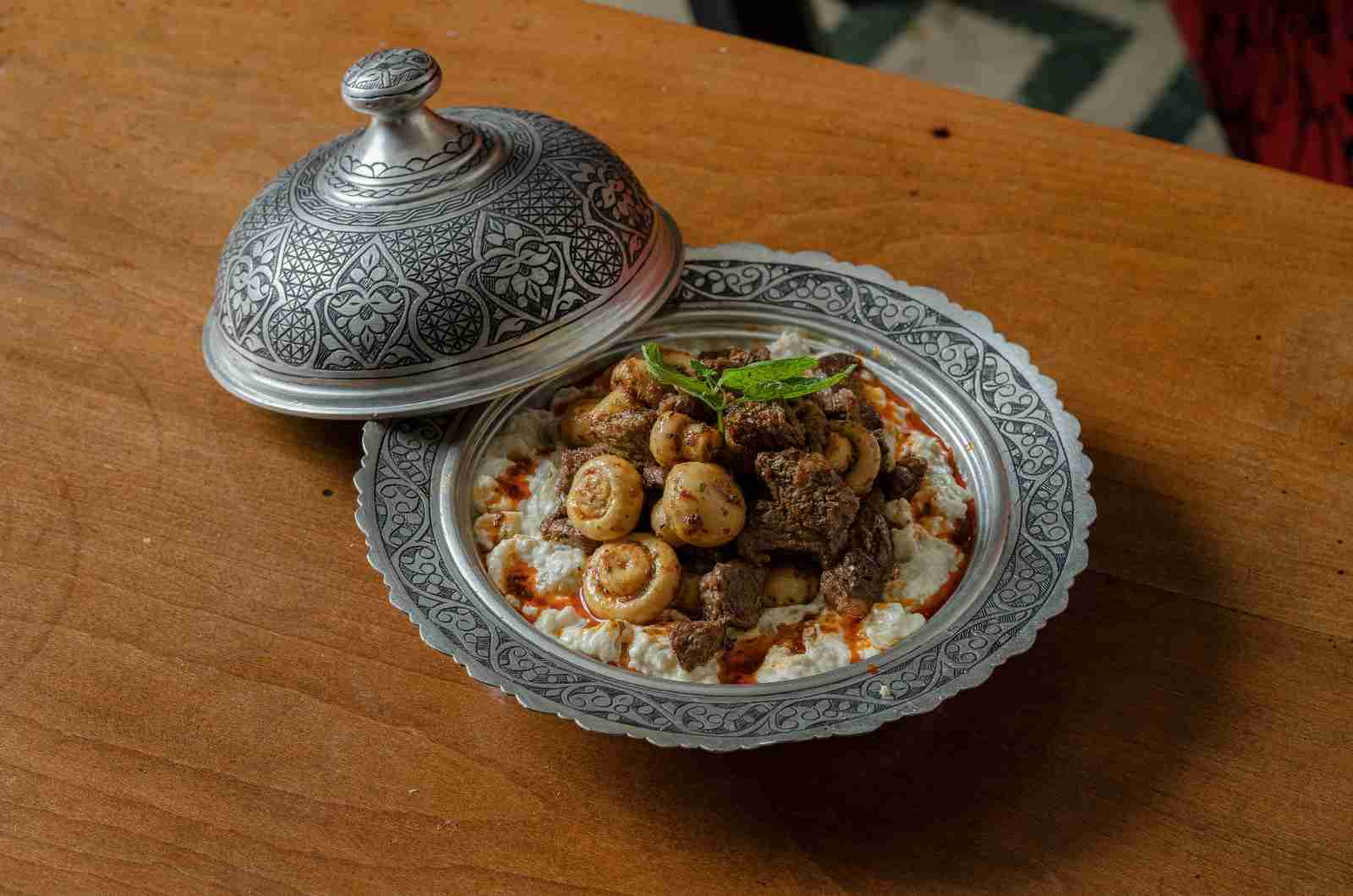
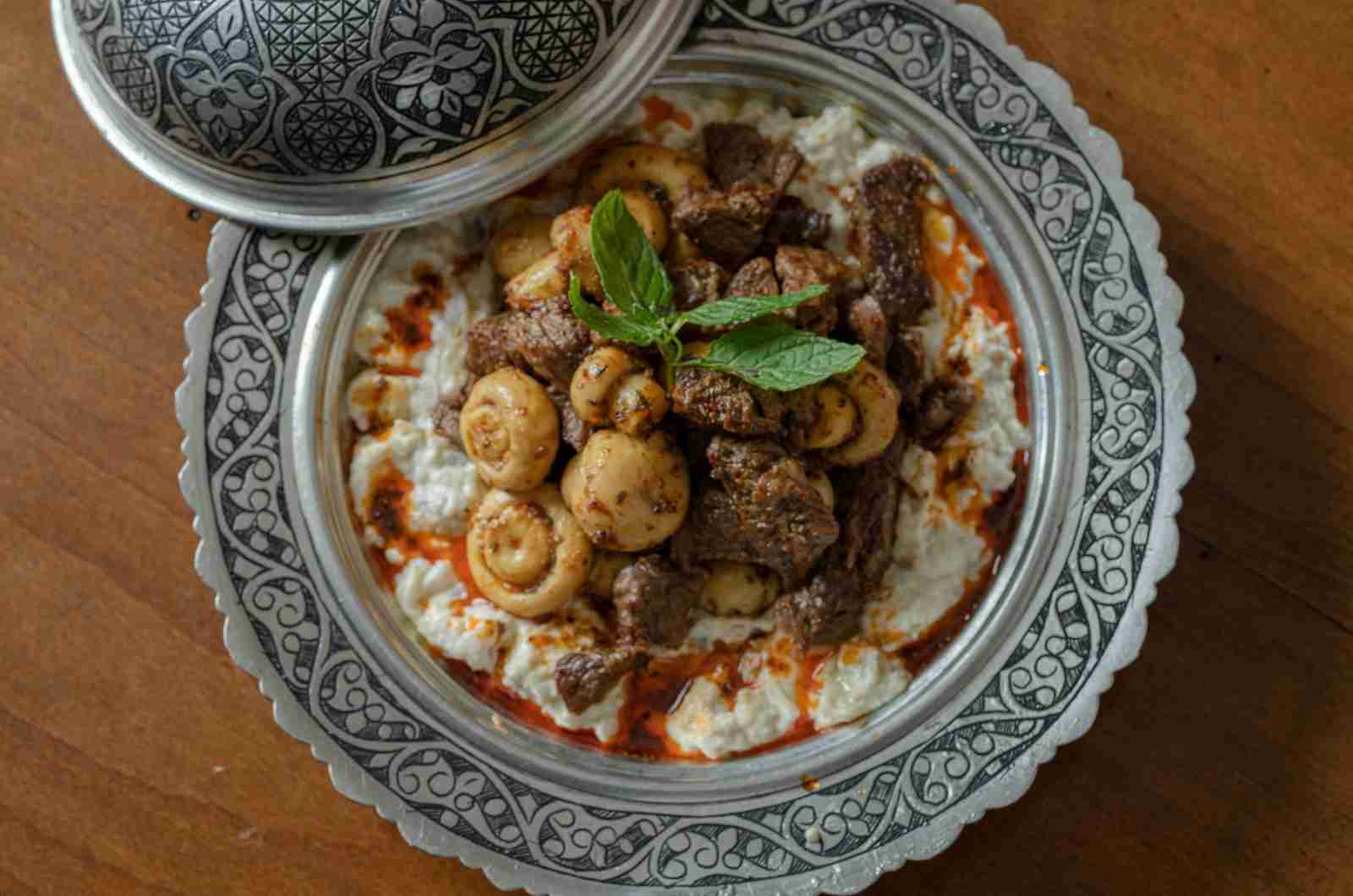
The Harab'be Special is marked "highly recommended" on the menu, and that is not marketing language for its own sake. It is marinated pieces of beef served on a bed of mashed aubergine with the chef's special sauce, and it arrives under a chased silver dome that the waiter lifts at your table. The smoked aubergine puree underneath is the part that surprises people. Aubergine roasted directly over flame until the skin blisters, then mashed with butter and cheese, has a smoky depth that has nothing to do with the vegetable most guests expect.
The beef on top is cut small, marinated, and cooked with mushrooms until the sauce reduces into the puree. Eat it the way it is meant to be eaten: push a little of the meat into the aubergine with each forkful so that both flavours land at once. Bread is essential here, and so is a plain drink - ayran or a glass of Turkish tea rather than anything sweet.
Cokertme Kebab: A Mugla Classic on a Sultanahmet Table
Cokertme Kebab comes from Bodrum, on the Aegean coast, and it is one of the few regional Turkish dishes that has travelled well without being changed. Ours follows the original closely: sliced beef, coloured peppers, very thin fried potatoes, served with yoghurt, aubergine and tomato sauce. The trick of the dish is textural. The potatoes are cut like straw and fried crisp, then the hot meat and warm tomato sauce are spooned over them and the cold garlic yoghurt goes on last. For the first two minutes everything is crunchy; after that the potatoes soften into the sauce and the dish becomes something else entirely. Both stages are good, which is why nobody eats Cokertme slowly.
Guests who have spent the day walking between the Hippodrome obelisks and the Grand Bazaar tend to order this one. It is generous without being heavy, and it goes well with a table that is also sharing mezes.
Sac Tava: Beef, Peppers and Lavash on One Tray
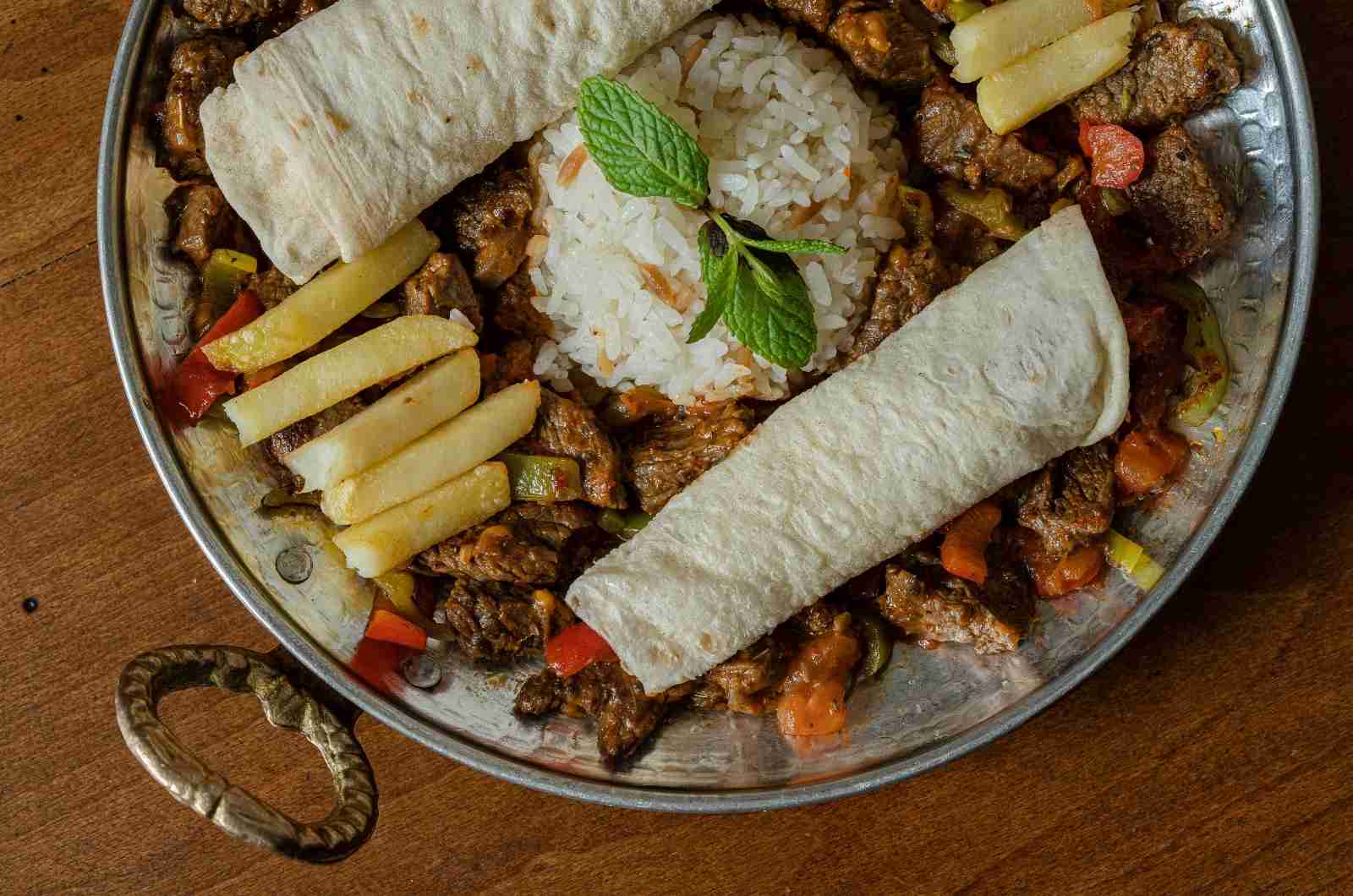
Sac tava takes its name from the sac, the domed iron plate that has been used across Anatolia for centuries, first for bread and later for meat and vegetables. The plate heats fast and cools fast, so the cooking is quick and the pieces of beef seal rather than stew. On our menu it is pieces of beef with coloured peppers, herbs and tomato, served with potato and pita bread on a copper tray wide enough for two people to reach across.
This is the dish to order when you cannot decide whether you want a kebab or a stew. There is rice in the middle, fried potatoes at the edge, and rolled lavash that you can either eat alongside or open up and fill yourself. It is also the most social plate on the Turkish cuisine page: one tray in the centre, everyone with a fork, nobody with their own portion. That style of eating is the part of Turkish hospitality that visitors remember longest, and we have written about it separately in our piece on the Turkish tradition of warmth at the table.
Testi Kebab: The Clay Pot That Is Broken at Your Table
Testi Kebab is the one that stops conversation in the room. A sealed clay pot is filled with meat, sauteed onions, peppers, tomatoes and mushrooms, then cooked slowly so that nothing escapes: no steam, no aroma, no juice. When it is ready the pot is carried to your table, set alight, and the neck is struck off with the back of a knife. The contents pour out at once, and the smell arrives with them.
Because of the way it is cooked, testi kebab is prepared for two people and comes in three versions on our menu - chicken, meat, or a combo of both - each served with sauteed onions, peppers, tomatoes, mushrooms and garnish. It needs a little patience: the pot has to be sealed and cooked, so tell your waiter early in the evening if you want one. In practice this works out well. Order the testi first, then eat mezes and drink something slowly while it cooks, and the main course arrives exactly when you are ready for it.
Manti: Turkish Ravioli Under Garlic Yoghurt
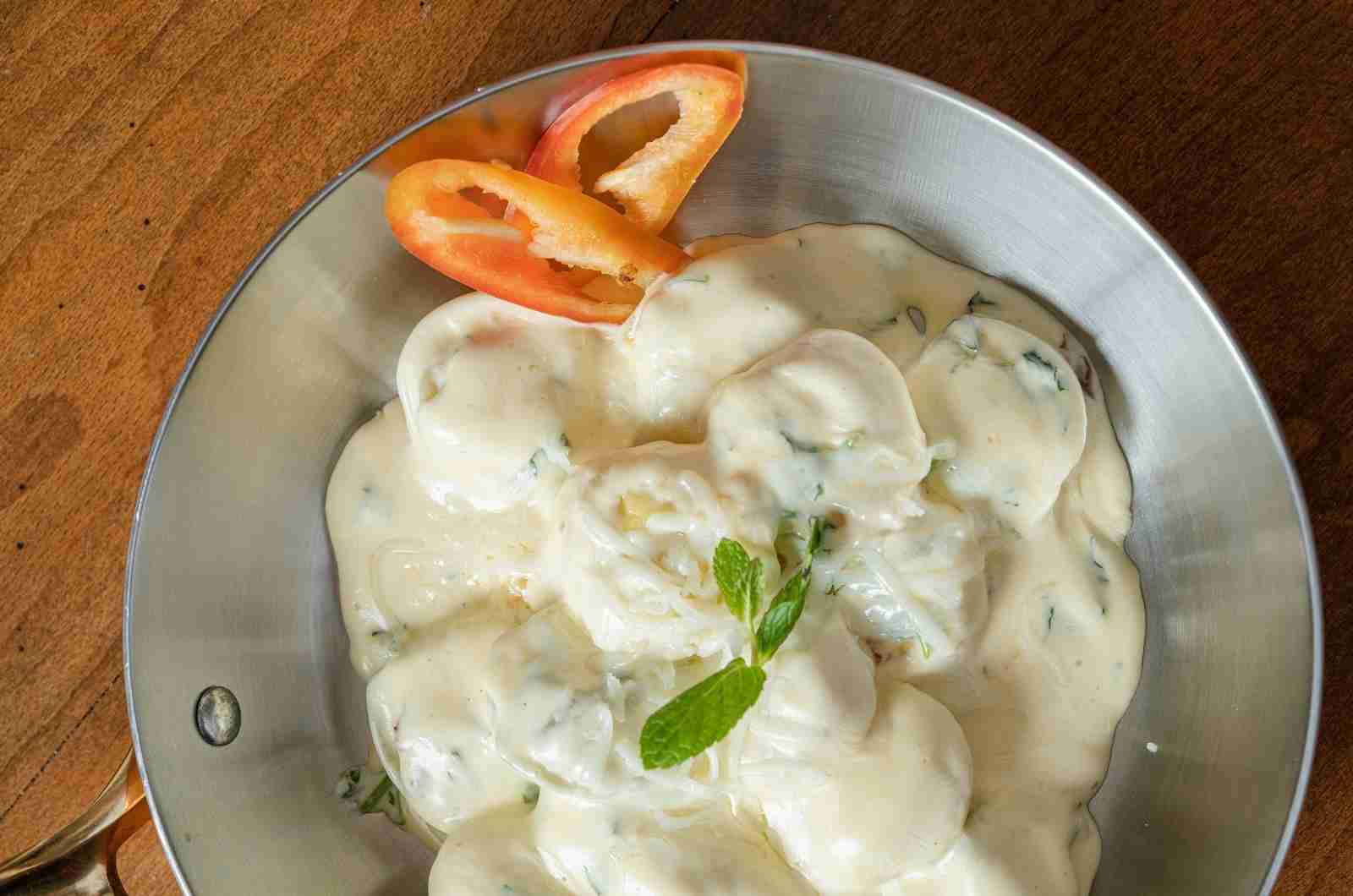
Manti is the Turkish dish that people either already love or have never heard of. Small parcels of dough are filled, boiled, then covered with yoghurt and finished with butter and chilli pepper sauce. Ours is served with yoghurt, butter and chilli pepper sauce in the classic way, listed on the pasta page of the menu but belonging in spirit to the Turkish cuisine section.
It is a good order for guests who do not eat much red meat but still want something recognisably Turkish, and it is one of the few dishes on the table that children finish without negotiation. Ask for extra chilli butter on the side if you like heat; the base version is deliberately mild so that the yoghurt and garlic stay in front.
Before the Main Course: Cold and Warm Mezes
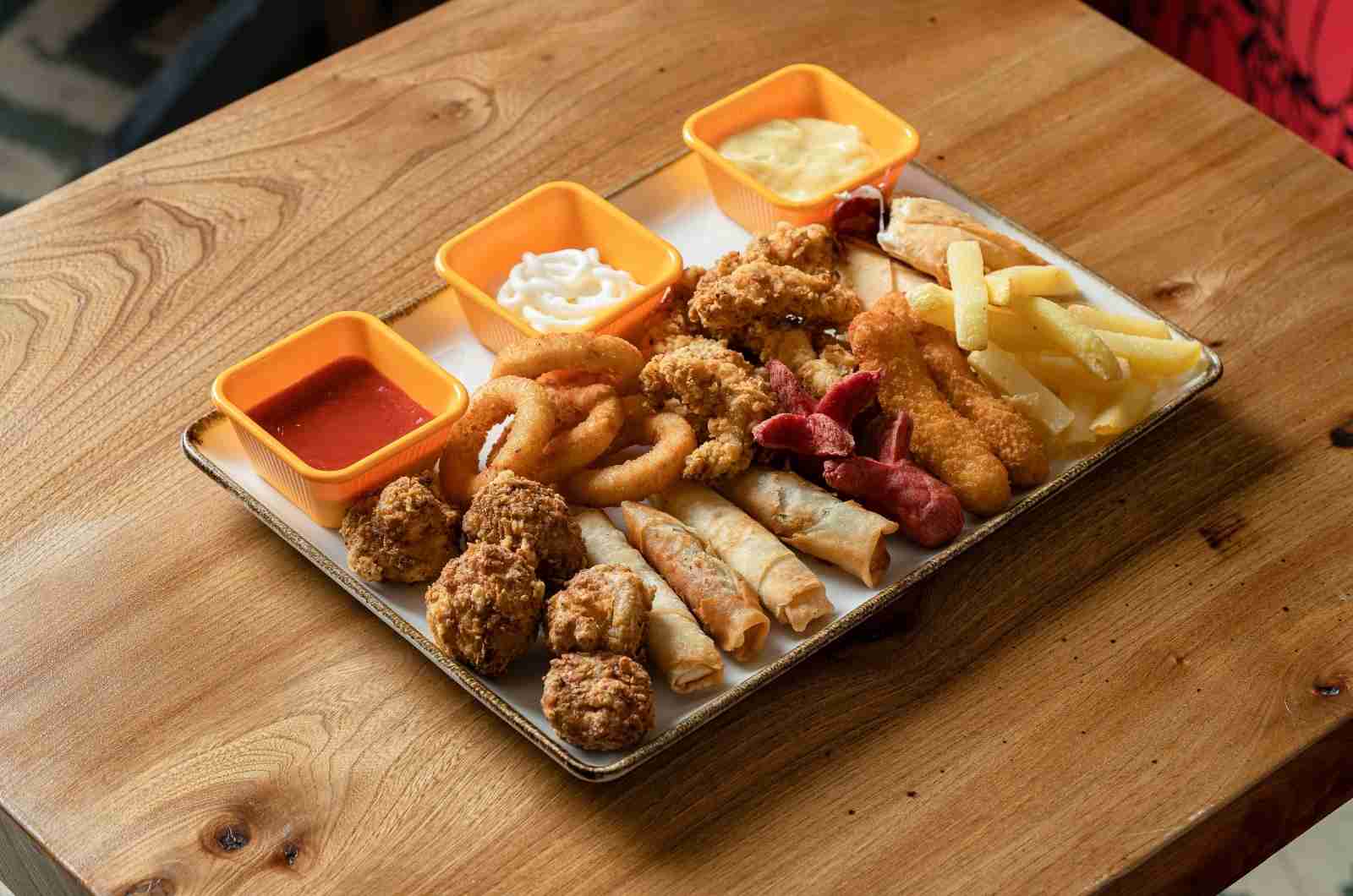
A Turkish table does not begin with the main course. It begins with a row of small plates that stay on the table for the whole meal. On the cold side we serve a cheese plate of traditional Turkish cheeses with greens, a mix meze plate of olive-oil starters, humus, acili ezme with tomato, onion, garlic, chilli and pomegranate sauce, a baked aubergine salad, stuffed vine leaves and cacik - yoghurt with garlic, cucumber and fresh mint.
On the warm side there is sigara boregi, the fried cheese-filled pastry roll that almost everyone orders twice, falafel, icli kofte with minced meat and walnuts inside a bulgur shell, spicy chicken wings, mozzarella sticks and a cajun basket of marinated chicken with honey mustard sauce. If your table cannot decide, the beer platter brings mozzarella sticks, pacanga pastry, cheese rolls, cajun mushroom, onion rings, sausage and potato on one board.
Our advice: order two cold mezes and one warm meze for every two people. That is enough to eat properly while you wait without spoiling the main course.
Kebabs and Dishes for Sharing
The kebab page runs alongside the Turkish cuisine page and covers the classics: Adana kebap of minced meat with rice, potatoes and seasonal greens; pistachio kebab, where crushed pistachios go into the mince; chicken shish; chicken wings kebab; grilled kofte with cheese; and lamb chops. For a group that wants everything at once there is the mix kebab plate - lamb chops, chicken chops, Adana, chicken wings, meatball and chicken shish, with grilled tomato, grilled pepper, mini cheese pita, rice, potatoes and greens - available for one person or two.
From the sea there is grilled sea bass, sea bream, salmon, a shrimp casserole cooked in butter with garlic mushrooms and tomato, and a mixed seafood plate for two. Vegetarians are not an afterthought here either: sebze guvec, the roasted vegetable casserole with cream sauce, cheese and rice, is a full main course rather than a side dish.
What to Drink With Turkish Food
Turkish tea is the default, and it should be. We serve it in a French press so that the table can pour its own for the length of the meal, and it costs less than any other drink on the list for a reason: it is supposed to keep coming. Ayran, salted yoghurt drink, is the traditional partner for kebabs and for anything with chilli. Fresh pomegranate juice and fresh lemonade are the two cold drinks most often ordered with the mezes.
After the plates are cleared, most tables move to coffee. Turkish coffee is served single or double, and there is also sahlep in the colder months, a thick hot drink of orchid root and milk dusted with cinnamon. If you want something less traditional, the bar list runs from classic cocktails to our own signatures, including one built on raki called Bosphorus and another called Istanbul. And of course there is the reason many guests came in the first place - the shisha menu, from the fresh-pineapple Mr. Pineapple head to the house mixes. We covered that side of the house in detail in our article on the timeless allure of hookah at Harab'be Cafe.
Something Sweet to Finish
The dessert list is short on purpose. Baklava, made with walnuts and pistachios and soaked in syrup after baking, is the one nobody skips; if you want to know why it matters so much in Turkish culture, we wrote a whole piece about baklava as a sweet taste of tradition. Alongside it there is rice pudding baked in the oven until the top browns, a chocolate souffle with vanilla ice cream, plain ice cream, a plate of mixed seasonal fruit, and a mix dessert plate that combines baklava, rice pudding and cheesecake for a table that cannot choose.
How to Plan a Turkish Dinner at Harab'be Cafe
For two people: one cold meze, one warm meze, one dish from the Turkish cuisine page, tea throughout, baklava at the end. For four: double the mezes, add a sac tava in the middle of the table and one kebab plate, and finish with the mix dessert plate. For six or more: order the testi kebab as soon as you sit down, keep the mezes coming while it cooks, and add the mix kebab plate for two people to share around.
We are on Divanyolu, a few minutes' walk from Hagia Sophia, the Blue Mosque and the Basilica Cistern, which means most of our guests arrive tired and hungry at the end of a long day of sightseeing. That is the right time to come. If you want to understand the street itself before you visit, our guide to Divanyolu Street and its place in Istanbul's history covers the road that has carried travellers through this neighbourhood for sixteen centuries. And if you are still deciding where to spend your evening, the unique charm of Harab'be Cafe in Sultanahmet explains what the room itself is like.
Frequently Asked Questions
Do I need to book a table for testi kebab? A reservation is not required, but tell us in advance if you want testi kebab, because the pot has to be sealed and cooked before it can be served. Ordering it at the start of the evening is the simplest solution.
Is there a vegetarian option in Turkish cuisine here? Yes. Sebze guvec and grilled vegetables are full main courses, and most of the cold mezes - humus, acili ezme, aubergine salad, vine leaves, cacik and the cheese plate - are meat-free.
What is the difference between Cokertme Kebab and Sac Tava? Both are sliced beef, but Cokertme is built on straw-cut fried potatoes with garlic yoghurt, while sac tava is cooked with peppers and tomato on an iron plate and served with rice and lavash.
Can we eat and smoke shisha at the same table? Yes. Most of our guests order food first and move to the hookah menu afterwards, and the staff will change the table setting between the two.
How spicy is the food? Adana kebap is marked spicy on the menu, and acili ezme has chilli in it. Everything else is mild by default, and chilli butter or sauce can be served on the side.
A Turkish Table in the Middle of Sultanahmet
Sultanahmet is a neighbourhood where it is easy to eat badly. There are hundreds of places within ten minutes of the Blue Mosque, and a lot of them are built around the assumption that no guest will ever come back. We have been on Divanyolu long enough that most of our tables are people who did come back, or people sent by someone who did - which is why the Turkish cuisine page of the menu has stayed almost unchanged for years.
Come hungry, order one dish from that page, put two or three mezes in the middle of the table, and let the tea keep arriving. If you want to read more about the neighbourhood before you visit, our piece on Sultanahmet as a historical marvel in the heart of Istanbul is a good place to start, and the full menu is always available on our website before you arrive.